

If you are learning to drive, one of the first questions you may ask is, which one is the brake in the car? The answer is simple, but understanding the braking system is much more valuable than simply memorizing the pedal position. In a conventional car, the brake pedal is the pedal you press to slow down or stop the vehicle. In most modern cars, it is positioned to the left of the accelerator pedal. In an automatic transmission vehicle, there are normally two pedals: the accelerator on the right and the brake on the left.
Knowing the correct pedal is essential because confusing the accelerator and brake can create a serious safety risk. However, the pedal is only the driver’s interface with a much larger mechanical, hydraulic, and sometimes electronic system. When you press it, force travels through several components before braking force reaches the wheels.
This same engineering principle—controlled energy transfer, reliable actuation, feedback, protection, and fault detection—is important in marine and industrial electrical systems. Electrical Marine Solutions works in marine power and technical support, and its published company information describes experience in marine electrical systems and technical solutions for ships, yachts, and offshore installations.
Quick Answer
The brake in a car is normally the pedal located to the left of the accelerator. In an automatic car, the brake pedal is usually the wider pedal on the left, while the accelerator is the narrower pedal on the right. Pressing the brake activates the vehicle’s braking system and reduces wheel speed.
Which One is the Brake in the Car?
In most cars, the brake pedal is the pedal immediately to the left of the accelerator pedal. Automatic cars usually have two pedals: brake on the left and accelerator on the right. Manual cars normally have three pedals: clutch on the far left, brake in the middle, and accelerator on the right.
Key Takeaways
- The brake pedal is normally positioned to the left of the accelerator.
- Automatic cars generally have two pedals: brake and accelerator.
- Manual cars normally have three pedals: clutch, brake, and accelerator.
- The brake pedal controls a complete braking system rather than stopping the car by itself.
- Brake pads, rotors, calipers, brake fluid, master cylinders, and electronic controls can all affect braking performance.
- A soft, spongy, vibrating, noisy, or unusually hard pedal should be investigated.
- Regular inspection and preventive maintenance can help identify problems before they become serious.
- Modern vehicles increasingly combine mechanical braking with electronic systems such as ABS and electronic stability controls.
What Is the Brake in a Car?
The brake is a safety-critical vehicle system designed to reduce speed or bring a vehicle to a controlled stop. When drivers refer to “the brake,” they may mean the brake pedal, the braking mechanism, or the entire braking system. These are related but technically different terms.
The brake pedal is the component controlled directly by the driver. The braking system includes the mechanical, hydraulic, and electronic components that convert pedal input into braking force at the wheels. In a conventional hydraulic system, pressing the pedal moves a master-cylinder piston, creating hydraulic pressure in the brake lines. That pressure reaches calipers or wheel cylinders, which then apply friction components against rotating parts.
The fundamental purpose is to convert the vehicle’s kinetic energy into heat and dissipate it safely. This is why brake components can become extremely hot during repeated or heavy braking.
From an engineering perspective, a braking system must provide predictable response, adequate force, thermal capacity, durability, and fault resistance. Similar principles apply to industrial and marine equipment, where motors, generators, control systems, switchboards, and automation equipment must respond reliably under demanding operating conditions.
How to Identify the Brake Pedal
Identifying the brake pedal is especially important for new drivers. In a typical automatic transmission car, sit in the driver’s seat and look at the pedals in the footwell. You will normally see two pedals. The brake is on the left, while the accelerator is on the right. The brake pedal is usually wider than the accelerator.
In a manual-transmission vehicle, there are three pedals. From left to right, they are normally the clutch, brake, and accelerator. The brake therefore sits between the clutch and accelerator.
A useful beginner rule is right foot for both brake and accelerator in an automatic car. The driver moves the right foot between the two pedals rather than using one foot for each. This arrangement helps reduce the risk of accidentally pressing both pedals simultaneously.
Never rely only on pedal appearance when driving an unfamiliar vehicle. Different vehicles have different pedal shapes and layouts. Before moving, adjust the seat, identify the pedals, check the gear selector, and become familiar with the controls while the vehicle is stationary.
How a Car Braking System Works
The basic operating principle begins when the driver applies pressure to the brake pedal. That mechanical input is transferred to the brake system, where it is multiplied and converted into hydraulic or electronic control signals depending on the vehicle design.
In a conventional hydraulic braking system, the brake pedal operates a master cylinder. The master cylinder pressurizes brake fluid. Because brake fluid is essentially incompressible, pressure can be transmitted through brake lines to braking mechanisms near each wheel.
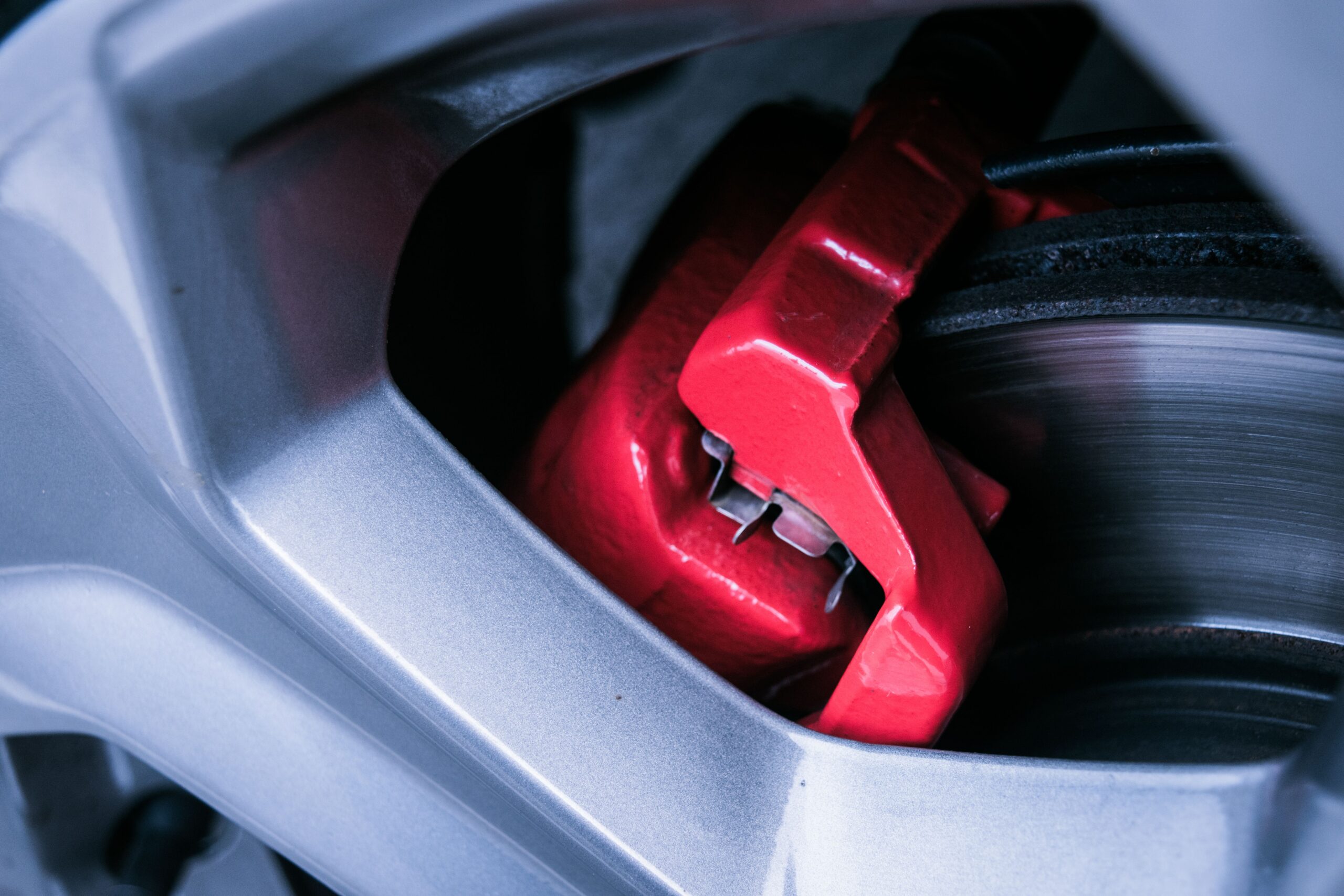
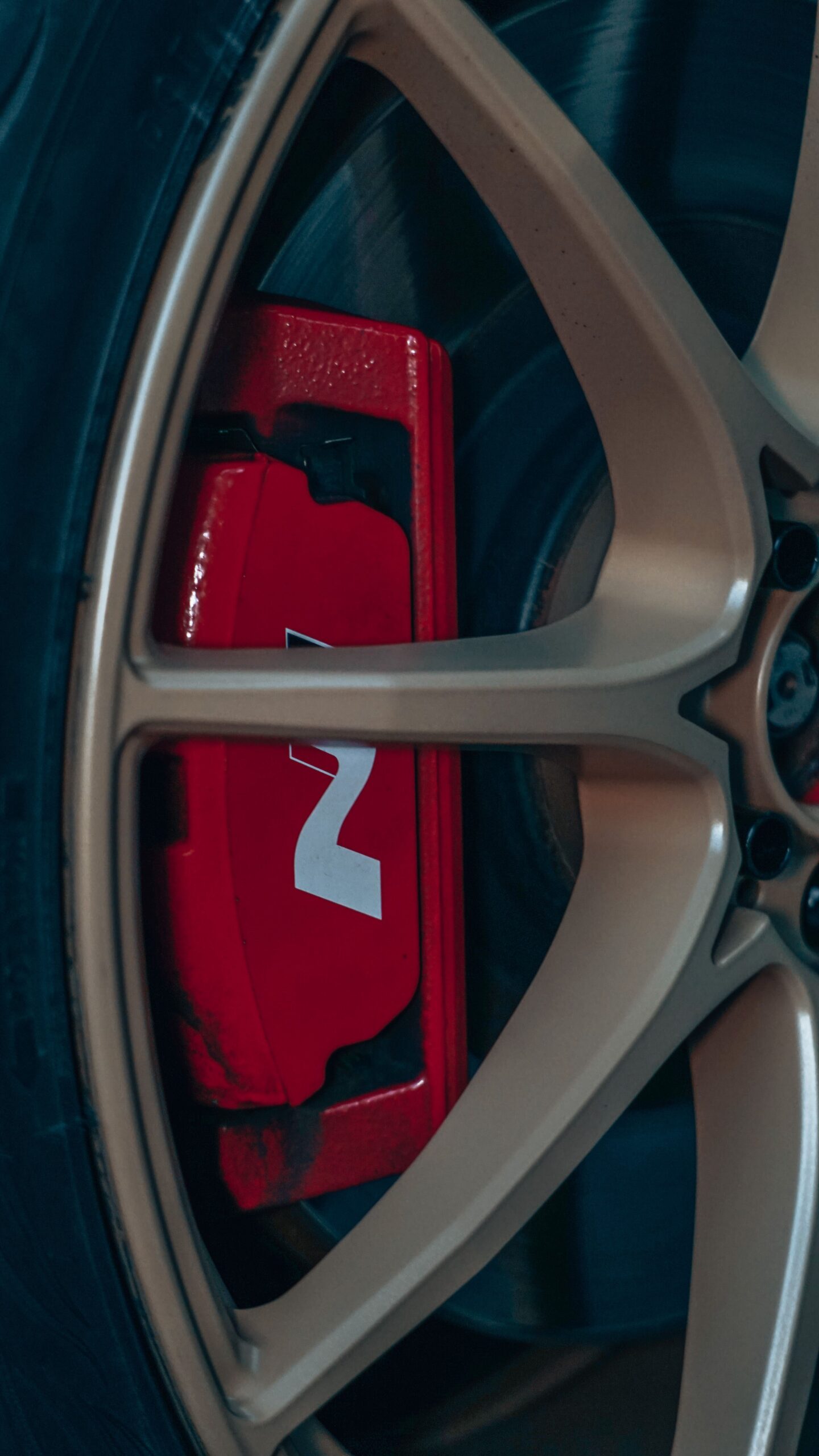
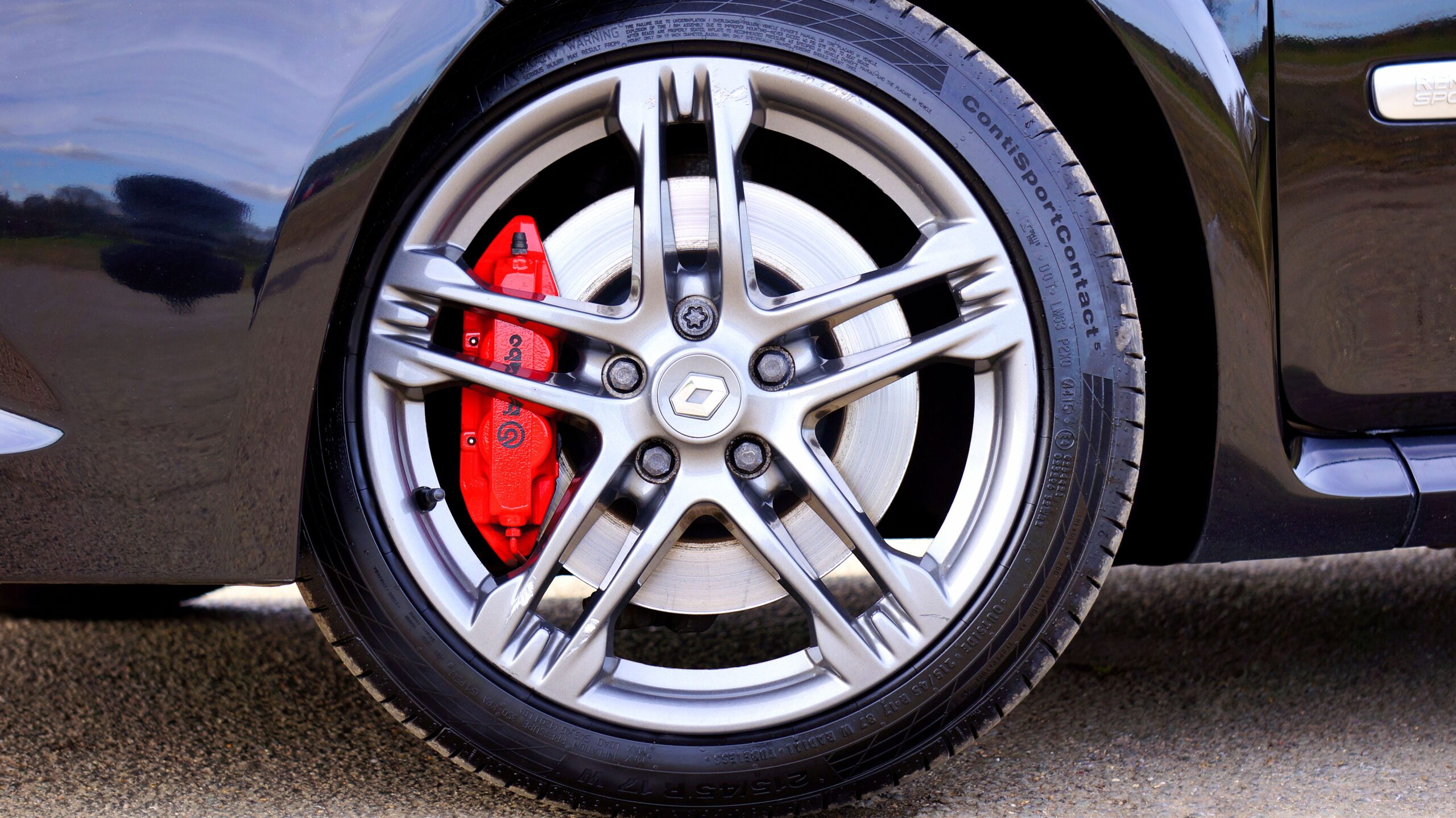
At the wheel, a disc brake normally uses a caliper to squeeze brake pads against a rotating rotor. The resulting friction slows the rotor and therefore slows the wheel. Drum brakes use a different arrangement: brake shoes press outward against the inside surface of a rotating drum.
Modern vehicles may also include ABS, wheel-speed sensors, electronic control modules, traction control, and electronic stability systems. These systems can monitor wheel behavior and adjust braking pressure to maintain vehicle control.
The complete process demonstrates a simple engineering chain: driver input → control mechanism → force transmission → friction → heat → reduced motion.
Major Components of a Car Brake System
A braking system contains several components, and each has a specific function. The brake pedal provides driver input, while the brake booster can amplify the driver’s force. The master cylinder converts mechanical movement into hydraulic pressure.
Brake fluid carries pressure through the hydraulic circuit. Brake lines and hoses provide the pathway for that fluid. At the wheels, calipers and pads provide friction in a disc-brake configuration. The rotor rotates with the wheel and receives friction from the pads.
A drum-brake assembly uses wheel cylinders, shoes, springs, and a drum instead. Many vehicles use a combination of disc and drum brakes depending on design.
Modern systems also use sensors and electronic controllers. ABS wheel-speed sensors detect changes in wheel rotation. The ABS control module can rapidly adjust hydraulic pressure to prevent wheel lock during hard braking.
From a maintenance perspective, no single component should automatically be blamed when braking performance changes. A professional inspection considers the complete system, including mechanical condition, hydraulic integrity, fluid condition, sensor signals, electrical connections, and control-module diagnostics.
Types of Car Brakes
The two major mechanical braking arrangements found on passenger vehicles are disc brakes and drum brakes. Disc brakes use a flat rotor and caliper assembly. When hydraulic pressure activates the caliper, brake pads clamp the rotor. Disc brakes generally offer effective heat dissipation and are widely used on modern vehicles.
Drum brakes contain braking shoes inside a rotating drum. When activated, the shoes press against the inner surface of the drum. Drum systems can be durable and cost-effective, which is why they remain common on certain rear axles.
There are also different control technologies. Traditional hydraulic brakes depend heavily on mechanical and fluid pressure. ABS adds electronic monitoring and pressure modulation. Regenerative braking in hybrid and electric vehicles can use the traction motor to recover some kinetic energy while reducing reliance on friction brakes.
Parking brakes can also vary. A traditional hand-operated parking brake mechanically holds the vehicle, while modern cars may use an electronic parking brake.
The technology may differ, but the objective remains the same: provide controlled deceleration and secure stopping.
Step-by-Step: What Happens When You Press the Brake?
When you press the brake pedal, several events occur in rapid succession. First, your foot applies mechanical force to the pedal. The pedal mechanism transfers that force to the brake booster and master cylinder.
The master cylinder generates hydraulic pressure in a conventional hydraulic system. Brake fluid moves through the brake circuit toward the wheel assemblies. At the wheels, hydraulic pressure causes caliper pistons or wheel-cylinder pistons to move.
With disc brakes, the caliper presses brake pads against the rotor. With drum brakes, brake shoes contact the inside of the drum. Friction is generated between the stationary braking material and the rotating component.
That friction converts kinetic energy into thermal energy. As wheel speed decreases, the vehicle slows. If the driver continues applying sufficient braking force, the vehicle eventually stops.
If ABS detects that a wheel is approaching lock-up, its control system can rapidly modify brake pressure. This helps preserve steering control during emergency braking.
This sequence is a good example of multidisciplinary engineering because mechanical, hydraulic, thermal, electronic, and control principles can operate together in milliseconds.
Brake Inspection and Testing Procedures
A professional brake inspection should begin with a visual assessment. Technicians examine the brake pads or shoes, rotors or drums, calipers, hoses, lines, and visible connections. They look for abnormal wear, leaks, corrosion, cracks, overheating, and contamination.
The brake fluid reservoir should also be checked. Low fluid may indicate leakage or significant pad wear, although the correct diagnosis depends on the vehicle design. Fluid condition and manufacturer-recommended replacement intervals should be considered.
A functional test evaluates pedal feel, braking response, vehicle pulling, vibration, unusual sounds, and stopping behavior. More advanced diagnostic equipment can identify ABS or electronic brake-control faults.
Where appropriate, technicians may measure rotor thickness, runout, pad thickness, drum diameter, and other specifications against the vehicle manufacturer’s limits. Brake-line pressure testing can help identify hydraulic problems.
For electronically controlled systems, diagnostic scanning may reveal stored fault codes and sensor abnormalities. However, a diagnostic code should not automatically be treated as proof that a particular component must be replaced. The code is a starting point for structured troubleshooting.
Common Brake Problems and Their Causes
Brake problems can develop gradually or appear suddenly. A soft or spongy pedal may be associated with air in the hydraulic system, fluid problems, leaks, or other hydraulic faults. A very hard pedal can indicate problems involving brake assistance or mechanical components.
Grinding noises can occur when friction material is severely worn, allowing metal components to contact each other. Squealing can have several causes, including pad material, vibration, contamination, installation conditions, or wear.
A vehicle that pulls to one side during braking may have uneven braking force, a sticking caliper, uneven friction material, tire issues, suspension problems, or other causes. Steering-wheel vibration during braking can sometimes be associated with rotor variation, but a complete inspection is necessary before confirming the cause.
Brake fluid leaks are particularly important because loss of hydraulic pressure can seriously reduce braking performance. Any visible fluid leak should be treated as a safety concern.
The correct approach is to diagnose the symptom rather than replace parts based only on assumptions.
Brake Warning Signs You Should Never Ignore
Several symptoms should prompt immediate attention when learning which one is the brake in the car. A brake warning light can indicate a hydraulic, fluid-level, parking-brake, ABS, or electronic problem depending on the vehicle. Understanding which one is the brake in the car is only the first step; drivers should also know the warning signs that indicate the braking system may require professional inspection.
A brake pedal that suddenly feels different deserves investigation. A pedal that sinks unusually far, feels soft, becomes extremely hard, or requires repeated pumping is not something a driver should ignore. If you know which one is the brake in the car, you can more easily recognize when the pedal’s normal behavior has changed. This makes understanding which one is the brake in the car useful for basic vehicle safety awareness.
Other warning signs include grinding, persistent squealing, strong burning odors, vehicle pulling, abnormal vibration, reduced braking response, and visible fluid leakage. When drivers understand which one is the brake in the car, they can respond more appropriately when these symptoms appear instead of continuing to drive without checking the vehicle.
Repeated heavy braking can also produce temporary performance changes caused by heat. This phenomenon, commonly called brake fade, can reduce braking effectiveness when friction components become excessively hot. Understanding which one is the brake in the car also means recognizing that pressing the pedal is only one part of a larger braking process involving friction, heat, hydraulic pressure, and mechanical components.
For commercial vehicles, fleet vehicles, and equipment operating under demanding conditions, preventive inspections become even more important. A small brake-system issue can develop into a major operational and safety problem if ignored. The same principle applies when explaining which one is the brake in the car: identifying the correct control is important, but maintaining the complete system is essential for safe and reliable operation.
Brake Troubleshooting Guide
A systematic troubleshooting process is safer than guessing. For anyone learning which one is the brake in the car, begin by recording the exact symptom: Is the pedal soft? Is braking weak? Is there vibration? Is the vehicle pulling? Is there noise? Does the problem occur only when the brakes are hot? Understanding which one is the brake in the car helps establish the correct starting point before investigating the wider braking system.
Next, inspect the obvious mechanical components and fluid system. Check for leaks, abnormal wear, damaged hoses, contaminated friction surfaces, and unusual component movement. When diagnosing which one is the brake in the car, remember that the brake pedal itself is only the driver’s input; the actual braking action involves multiple mechanical and hydraulic components.
If the vehicle has ABS or electronically controlled braking, scan the appropriate control systems. Check wheel-speed sensor signals and wiring where relevant. Inspect connectors for corrosion, loose terminals, physical damage, or moisture intrusion. A complete understanding of which one is the brake in the car therefore includes recognizing how mechanical braking can interact with electronic systems.
For marine and industrial engineers, this approach will look familiar. Electrical troubleshooting frequently follows the same logic: define the symptom, isolate the subsystem, measure the relevant parameter, compare it with an acceptable value, identify the root cause, repair the fault, and verify the result. This is similar to understanding which one is the brake in the car, where identifying the control is only the beginning of understanding the complete system.
The same philosophy is valuable in Marine Electrical Services, PLC Programming, control systems, power distribution, generator maintenance, and industrial automation. Replacing components without establishing the root cause can waste money and allow the original problem to return. The simple question which one is the brake in the car demonstrates the importance of correct identification before troubleshooting, while which one is the brake in the car also provides a useful example of how a user-controlled input can connect to a larger technical system.
Brake Maintenance Tips
Preventive maintenance is one of the most effective ways to protect braking performance. Follow the vehicle manufacturer’s service recommendations and inspect the system whenever unusual symptoms appear.
Brake pads and rotors should be checked for wear. Brake fluid should be maintained according to manufacturer requirements. Hydraulic lines and flexible hoses should be inspected for leakage, cracking, corrosion, or damage.
Avoid ignoring small noises or changes in pedal feel. Early diagnosis can sometimes prevent secondary damage. Wheel components should also be inspected because brake performance depends on the complete wheel-end assembly.
After brake work, technicians should verify correct installation and conduct an appropriate functional test. Components must be torqued according to manufacturer specifications, and the hydraulic system must be properly serviced when opened.
Preventive maintenance is equally important in marine environments. Saltwater, humidity, vibration, heat, corrosion, and continuous operating cycles can accelerate equipment degradation. Marine electrical preventive maintenance therefore focuses heavily on inspection, testing, environmental protection, and early fault detection.
Safety Precautions When Working on Brakes
Brake work should be treated as safety-critical maintenance. For anyone learning which one is the brake in the car, understanding the correct pedal is only the first step; safe maintenance requires knowledge of the complete braking system. A vehicle must be securely supported before anyone works underneath it. Never depend solely on a jack when a proper support system is required.
Use appropriate personal protective equipment and follow the vehicle manufacturer’s procedures. Brake dust should not be handled carelessly, and cleaning procedures should be appropriate for the materials involved. Understanding which one is the brake in the car can help new drivers identify the correct control, but it does not replace professional knowledge when servicing safety-critical components.
Hydraulic systems should be handled carefully. Use the correct brake fluid specification and avoid contamination. Do not mix incompatible fluids. When explaining which one is the brake in the car, it is also important to understand that pressing the pedal can activate a hydraulic system that operates components at the wheels.
After repairs, the braking system should be tested in a controlled environment before returning the vehicle to normal operation. If braking performance remains abnormal, the vehicle should not be considered safe simply because a component has been replaced. Knowing which one is the brake in the car is useful for basic driving awareness, while proper testing confirms whether the complete system is functioning correctly.
The same safety culture is essential in marine and industrial electrical engineering. Lockout/tagout practices, isolation, verification of zero energy, correct test equipment, and competent personnel are fundamental when working with energized or potentially hazardous systems. The basic concept behind which one is the brake in the car—correct identification before operation—also applies to complex marine equipment.
For marine engineers, the lesson from which one is the brake in the car extends beyond automotive systems. Every control, switch, circuit, and protection device must be correctly identified before work begins. In the same way, understanding which one is the brake in the car teaches beginners that a simple control can operate a much larger safety-critical system.
Whether working on vehicle brakes, marine switchboards, generators, motors, or PLC-controlled equipment, safety should always come before speed. The question which one is the brake in the car may appear simple, but it demonstrates an important engineering principle: identify the correct control, isolate hazards, follow procedures, use appropriate equipment, and verify safe operation before returning a system to service.
Brake Repair vs Replacement: Which Is Better?
Repair versus replacement depends on the failed component, manufacturer specifications, condition, safety requirements, and cost. For anyone learning which one is the brake in the car, it is important to understand that the brake pedal is only the driver’s control point and not the entire braking system. Knowing which one is the brake in the car helps identify the correct control, but professional diagnosis is still necessary to determine which component has failed.
Brake pads are consumable components and are generally replaced when they reach their service limit. Rotors may sometimes be machined if manufacturer specifications permit it, but replacement is required when thickness, damage, cracking, or other conditions exceed acceptable limits. When understanding which one is the brake in the car, drivers should also recognize that different components have different service requirements. A basic understanding of which one is the brake in the car can therefore help vehicle owners communicate more clearly with technicians.
Calipers may sometimes be rebuilt depending on their design and condition. Brake hoses, damaged lines, leaking cylinders, and defective electronic components generally require replacement or approved repair procedures. Knowing which one is the brake in the car does not mean assuming that the pedal itself has a fault; the complete braking system needs to be evaluated before a repair decision is made.
A professional decision should consider the root cause and the condition of related parts. Replacing a single component without checking associated components can result in repeated failures. This is similar to determining which one is the brake in the car: identifying one component is only the beginning, while understanding how the entire system operates leads to better decisions.
The same principle applies to marine generators, motors, switchboards, PLC systems, and industrial control equipment. The cheapest immediate repair is not always the most economical long-term solution. Reliability, downtime, safety, availability of parts, and lifecycle cost should all be considered. The broader lesson behind which one is the brake in the car is that proper identification must be followed by systematic inspection and diagnosis.
For marine and industrial systems, the same engineering approach used when explaining which one is the brake in the car can help technicians identify faults more accurately, avoid unnecessary replacement, and improve equipment reliability. Whether dealing with automotive braking or complex marine electrical equipment, understanding which one is the brake in the car illustrates an important principle: diagnose the complete system before deciding whether to repair or replace a component.
What Determines Brake Repair Cost?
Brake repair cost varies considerably because there is no single universal price. For beginners searching which one is the brake in the car, it is important to understand that identifying the brake pedal is only the first step; the complete braking system contains several components that can require inspection or repair. The total depends on vehicle type, brake design, replacement parts, labor rates, diagnostic requirements, and the extent of damage.
A routine pad replacement is normally much simpler than repairing a hydraulic leak, replacing multiple rotors, repairing an ABS fault, or addressing a damaged electronic control system. Understanding which one is the brake in the car also helps drivers recognize that the pedal itself is not usually the component responsible for creating friction at the wheels. When learning which one is the brake in the car, drivers should therefore understand the relationship between the pedal, hydraulic system, calipers, pads, rotors, and electronic controls.
The cost can also increase if a problem has been ignored. For example, severely worn friction material may damage a rotor or other components that would otherwise have remained serviceable. Knowing which one is the brake in the car can help new drivers respond correctly when they notice unusual braking behavior instead of continuing to operate the vehicle without inspection. A basic understanding of which one is the brake in the car can therefore support better maintenance decisions.
For industrial and marine equipment, cost calculations become even more complex. Engineers may need to consider vessel downtime, spare-parts availability, emergency callout requirements, diagnostic time, system integration, testing, and operational consequences. The same system-level thinking used to understand which one is the brake in the car is valuable when evaluating marine generators, motors, switchboards, PLC systems, and power-distribution equipment.
Electrical Marine Solutions describes its technical operation as supporting marine power requirements and technical consultation, with a focus on marine applications and professional support. For critical equipment, selecting a competent technical service provider can therefore be more important than choosing solely on initial price. Just as which one is the brake in the car is a simple question with a more complex engineering answer, marine electrical faults often require professional diagnosis rather than simple component replacement.
How Brake Engineering Relates to Marine Electrical Systems
Although a car brake is not a marine electrical component, understanding which one is the brake in the car provides a simple example of how a safety-critical system depends on correct operation. The engineering principles behind reliable braking are closely related to marine and industrial system reliability. Learning which one is the brake in the car helps demonstrate how a basic control input can activate a much larger system involving multiple components.
A brake system depends on controlled input, energy transfer, feedback, protection, and predictable response. Understanding which one is the brake in the car is therefore not only about identifying a pedal; it also introduces the concept of how user input interacts with an engineered system. Marine electrical systems use similar concepts. A generator supplies power, a switchboard distributes it, protective devices isolate faults, control systems manage operation, and sensors provide feedback.
On a commercial vessel, a fault in a motor control circuit, generator system, PLC, switchboard, or power-distribution network can affect essential operations. Marine Electrical Services therefore require more than simple component replacement. Engineers must understand system relationships, just as understanding which one is the brake in the car requires recognizing the relationship between the pedal, hydraulic system, braking components, and wheels. This makes which one is the brake in the car a useful starting point for explaining basic system-level engineering.
Electrical troubleshooting and electrical fault finding typically involve identifying symptoms, reviewing system diagrams, taking measurements, isolating the fault, repairing the underlying problem, and validating operation. The same structured process can be applied when explaining which one is the brake in the car, because identifying the correct control should be followed by understanding how the complete system responds. In both cases, which one is the brake in the car begins with identification but ultimately leads to understanding system operation.
Marine Automation and PLC Programming extend this concept by allowing control logic to coordinate pumps, motors, generators, alarms, and other equipment. In the same way that which one is the brake in the car can introduce beginners to controlled mechanical systems, marine automation demonstrates how sensors, controllers, outputs, and protection systems work together. Therefore, learning which one is the brake in the car can serve as a simple example of a broader engineering principle: reliable systems depend on correct input, controlled response, monitoring, and verification.
which one is the brake in the car
Applications Across Marine and Industrial Environments
Marine electrical engineering supports a wide range of applications, from small commercial vessels to complex offshore installations. Cargo ships, offshore platforms, workboats, passenger vessels, fishing vessels, yachts, and other marine assets can depend on reliable electrical and control infrastructure.
Marine switchboards distribute electrical power and provide protection and control. Generators provide primary or auxiliary power. Electric motors operate pumps, fans, compressors, winches, steering equipment, and many other loads.
Automation systems can monitor operating parameters and generate alarms when abnormal conditions occur. PLC-based systems can execute control sequences and interlocks. Preventive maintenance helps identify insulation degradation, loose connections, overheating, corrosion, vibration, and other developing problems.
These services connect directly with industrial electrical engineering, where reliability and process continuity are equally important. Proper inspection, documentation, testing, and root-cause analysis help reduce unexpected downtime.
which one is the brake in the car
Why Trust Electrical Marine Solutions
Electrical Marine Solutions presents itself as a Gdańsk-based marine-focused company with experience in marine electrical systems. For readers researching which one is the brake in the car, it is important to understand that identifying a brake pedal is only the beginning of understanding a complete engineered system. Its published information states that the business was founded in 2016 by three owners with more than 20 years of hands-on experience in the maritime electrical sector and provides solutions for ships, yachts, and offshore installations. This practical experience is also valuable when explaining how which one is the brake in the car relates to broader principles of safety, control, and system reliability.
For marine engineering work, experience matters because real-world faults do not always match textbook examples. Marine equipment operates in environments affected by vibration, moisture, corrosion, temperature variation, electrical loading, and demanding duty cycles. Similar to understanding which one is the brake in the car, engineers must first identify the correct system, understand its function, and then evaluate how individual components work together.
A competent marine electrical engineer approaches a fault systematically. Rather than immediately replacing a component, the engineer evaluates symptoms, checks documentation, measures electrical parameters, examines physical condition, verifies protection systems, and determines the root cause. This structured approach is comparable to diagnosing which one is the brake in the car, where correctly identifying the brake pedal is only the first step before understanding the complete braking system. Knowing which one is the brake in the car can help beginners appreciate how a simple control can operate a much more complex system.
Electrical Marine Solutions can be positioned around this engineering mindset: technical expertise, practical diagnosis, preventive maintenance, marine power knowledge, and dependable technical support. The company’s published site also highlights technical consultation, installation support, marine applications, and professional technical guidance. Whether someone is learning which one is the brake in the car or dealing with a complex marine electrical fault, the fundamental engineering principle remains the same: understand the system before attempting to repair it.
For shipowners and operators, the objective should always be reliable operation, safe maintenance, reduced downtime, and technically sound solutions. The simple question which one is the brake in the car demonstrates how important correct identification is before operating a safety-critical system. The same principle applies to marine switchboards, generators, motors, PLC systems, control systems, and power distribution equipment. Understanding which one is the brake in the car may be a basic automotive question, but the broader lesson is highly relevant to professional engineering: identify, inspect, diagnose, repair, and verify.
Inspection Checklist
A professional inspection should not be limited to one component. When learning which one is the brake in the car, it is important to understand that the brake pedal is only one part of the complete braking system. Start with the driver’s reported symptom and establish when the issue occurs. Understanding which one is the brake in the car helps beginners identify the correct control before examining the wider system. Then inspect the relevant mechanical and hydraulic components.
For vehicles equipped with electronic braking assistance, include appropriate electronic diagnostics. A proper understanding of which one is the brake in the car should also include knowledge of how the pedal connects with modern braking technologies. For marine equipment, technicians should similarly inspect power sources, distribution paths, protection devices, control circuits, sensors, communication networks, and automation logic. The same systematic approach used to understand which one is the brake in the car can be applied when diagnosing complex technical systems.
Documentation is another important part of inspection. Record measurements, observed defects, replaced components, test results, and final verification. Good documentation helps identify recurring problems and supports future maintenance planning. Whether you are identifying which one is the brake in the car or troubleshooting a sophisticated electrical system, accurate records make future diagnosis easier. Understanding which one is the brake in the car is therefore only the starting point for learning how a complete safety-critical system operates.
For commercial vessels and offshore equipment, maintenance records can also help operators plan shutdowns and reduce unexpected failures. The same engineering principles behind identifying which one is the brake in the car—systematic inspection, accurate testing, fault identification, and verification—are valuable in Marine Electrical Services and industrial engineering. For professionals, understanding which one is the brake in the car also demonstrates how a simple user control can connect to a larger mechanical, hydraulic, and electronic system.
Professional Tips From an Engineering Perspective
Do not confuse a symptom with a root cause. A warning light tells you that something has been detected; it does not necessarily tell you which component has failed.
Measure before replacing. Whether working on a vehicle, generator, motor, switchboard, or PLC system, measurements provide evidence.
Respect environmental conditions. Moisture, salt, heat, vibration, dust, and corrosion can affect equipment performance.
Use preventive maintenance instead of waiting for failure. Planned inspection is usually easier to control than emergency repair.
Verify after every repair. A repair is incomplete until the system has been tested and confirmed to operate correctly.
Follow specifications. Correct torque values, component ratings, fluid specifications, protection settings, cable sizes, and control parameters matter.
Keep records. Good maintenance history can reveal patterns that are invisible during a single inspection.
These principles apply equally to automotive systems and marine electrical engineering.
Future Trends in Vehicle and Marine Engineering
Vehicle braking technology is moving toward increasingly intelligent and electronically coordinated systems. Electric and hybrid vehicles are expanding the role of regenerative braking, where the traction motor can help slow the vehicle while recovering some energy.
Advanced driver-assistance systems can also interact with braking systems. Automatic emergency braking, electronic stability control, and sophisticated sensor systems demonstrate how mechanical systems are becoming increasingly integrated with software and electronics.
Marine engineering is following a similar direction. Modern vessels increasingly use automation, remote monitoring, digital diagnostics, PLC-based control, condition monitoring, and integrated power-management systems.
Predictive maintenance is another important trend. Instead of waiting for a component to fail, operators can monitor operating data and identify changes that may indicate developing problems.
For marine operators, this creates opportunities to reduce downtime and improve asset reliability. Marine Automation, PLC Programming, power management, electrical fault finding, and condition-based maintenance are therefore becoming increasingly interconnected.
FAQs
Which pedal is the brake in an automatic car?
The brake pedal is normally the pedal on the left in an automatic car. The accelerator is on the right. The brake is usually wider than the accelerator. Drivers generally use the right foot to operate both pedals, moving it between the accelerator and brake as required.
Which one is the brake pedal in a manual car?
In a manual car, the pedals are normally arranged from left to right as clutch, brake, and accelerator. Therefore, the brake pedal is the middle pedal. The clutch is used for gear changes, while the accelerator controls engine power.
Where is the brake in a car?
The driver’s brake control is normally located in the footwell. In an automatic vehicle, it is generally the left pedal of the two pedals. In a manual vehicle, it is usually the middle pedal between the clutch and accelerator.
Is the brake on the left or right?
In conventional left-hand-drive and right-hand-drive passenger cars, the brake pedal is generally positioned to the left of the accelerator. The steering-wheel side can change depending on the country, but the relative arrangement of brake and accelerator normally remains consistent.
Which pedal should you press to stop an automatic car?
To stop an automatic car, press the brake pedal smoothly with your right foot. The brake is normally the wider pedal on the left. Apply progressively more pressure when necessary, especially during an emergency. Always follow safe driving practices and vehicle-specific instructions.
Why is the brake pedal wider than the accelerator?
The brake pedal is commonly wider because it is a primary safety control that may need to be located and operated quickly. The exact pedal shape varies between vehicle manufacturers, but its position and function are designed to support predictable driver control.
What happens when you press the brake pedal?
Pressing the brake pedal activates the vehicle’s braking mechanism. In hydraulic systems, the master cylinder generates fluid pressure that operates calipers or wheel cylinders. Brake pads or shoes then create friction against rotating components, converting kinetic energy into heat and reducing vehicle speed.
What are brake pads?
Brake pads are friction components used primarily with disc brakes. A caliper presses the pads against a rotating brake rotor. Friction between the pads and rotor slows the wheel. Because they wear during normal operation, brake pads require periodic inspection and eventual replacement.
What is a brake rotor?
A brake rotor is a rotating disc attached to a vehicle’s wheel assembly. In a disc-brake system, brake pads are pressed against both sides of the rotor by a caliper. Friction between the pads and rotor converts vehicle motion into heat and reduces wheel speed.
What is ABS?
ABS means Anti-lock Braking System. It uses wheel-speed information and electronic control to help prevent wheels from locking during hard braking. By modulating brake pressure, ABS can help the driver maintain steering control while braking heavily on suitable road surfaces.
Why does a brake pedal feel soft?
A soft or spongy brake pedal can have several causes, including air or other problems within the hydraulic system, fluid leakage, component wear, or other faults. Because braking is safety-critical, a significant change in pedal feel should be professionally inspected before continued normal driving.
Why does my car pull when braking?
A vehicle may pull to one side during braking because of uneven braking force, a sticking caliper, uneven friction material, tire problems, suspension issues, or other mechanical conditions. A professional inspection should determine the actual cause rather than assuming that the brake pads alone are responsible.
Why do brakes make a grinding noise?
Grinding can occur when brake friction material has become severely worn and metal components are contacting each other. Other mechanical problems can also create grinding sounds. Persistent grinding should be investigated promptly because continued operation may increase damage and repair requirements.
How often should brakes be inspected?
Brake inspection frequency depends on vehicle design, mileage, driving conditions, manufacturer recommendations, and operating environment. Brakes should also be inspected whenever unusual noise, vibration, pulling, warning lights, fluid leakage, or changes in pedal behavior occur.
Can worn brakes affect stopping distance?
Yes. Severely worn, damaged, overheated, contaminated, or otherwise defective braking components can reduce braking performance. Stopping distance also depends on speed, tires, road conditions, vehicle weight, driver reaction time, and other factors, so braking performance should always be evaluated as a complete system.
What is brake fade?
Brake fade refers to reduced braking effectiveness caused by excessive heat under demanding conditions. Repeated heavy braking can raise brake temperatures significantly. If braking performance decreases because of heat, the vehicle should be operated safely and the braking system should be inspected when appropriate.
Should I repair or replace a brake component?
The decision depends on component condition, manufacturer specifications, safety requirements, and the nature of the fault. Wear items are normally replaced when they reach service limits. Other components may be repairable depending on design. A professional inspection should determine the safest and most economical solution.
Can electrical faults affect modern braking systems?
Yes. Modern vehicles can use electronic sensors, ABS modules, control units, and communication networks as part of braking and stability systems. Electrical faults can therefore affect electronic brake functions. Diagnostic scanning should be combined with physical inspection and electrical testing to identify the actual root cause.
Final Key Takeaways
The answer to which one is the brake in a car is straightforward: in a typical automatic car, the brake is the pedal on the left, next to the accelerator. In a manual car, it is normally the middle pedal between the clutch and accelerator.
But the brake pedal is only the driver’s interface with a sophisticated safety system. Effective braking depends on hydraulic pressure, friction components, mechanical condition, electronic controls, sensors, and proper maintenance.
Understanding this system is valuable not only for drivers but also for engineers. Reliable braking and reliable marine electrical systems share an important philosophy: identify the problem accurately, understand the system, measure before replacing components, follow technical specifications, and verify the repair.
For marine operators, commercial vessels, cargo ships, offshore platforms, and industrial facilities, the same reliability principles apply to generators, motors, Marine Switchboards, Power Distribution Systems, PLCs, Control Systems, and automation equipment.
Call to Action: Professional Marine Electrical Support
If your vessel or industrial facility requires dependable technical support, Electrical Marine Solutions can be considered for marine-focused engineering and technical assistance. The company’s published information identifies its focus on marine electrical systems, marine applications, technical consultation, installation support, and professional marine expertise.
For requirements involving Marine Electrical Services, Electrical Troubleshooting, Electrical Fault Finding, Marine Automation, Generator Repairs, Generator Maintenance, Motor Repairs, Marine Switchboard Maintenance, PLC Programming, Control Systems, Power Distribution Systems, Preventive Maintenance, Emergency Electrical Repairs, or Industrial Electrical Engineering, professional diagnosis should always come before unnecessary component replacement.
