

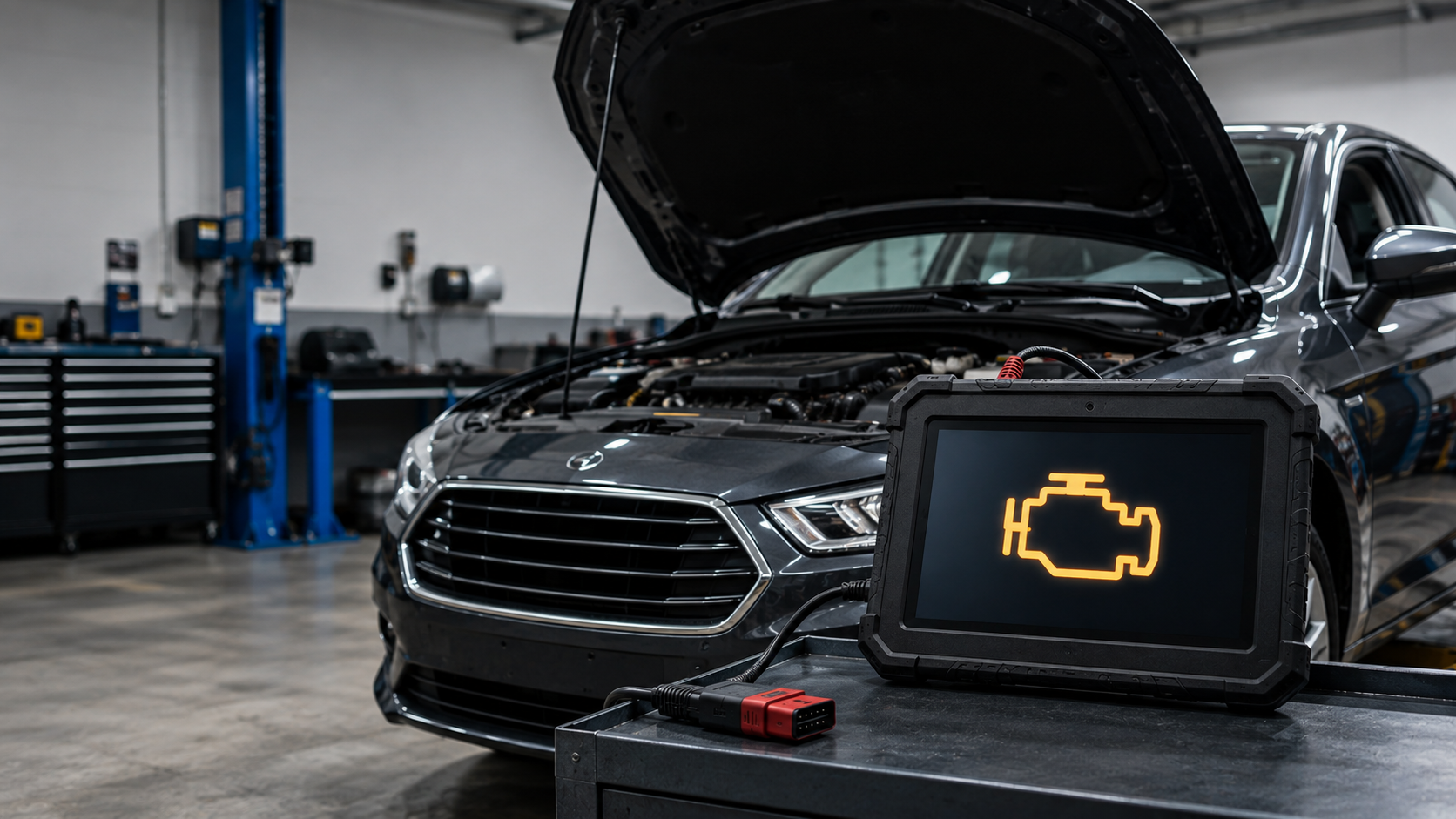
Seeing a check engine light appear on your dashboard can be worrying, especially when your vehicle still seems to drive normally. Many drivers immediately wonder, is it safe to drive with a check engine light on, or whether they should stop the vehicle immediately.
The answer depends on several factors. A solid check engine light may sometimes allow you to drive a short distance if the vehicle is operating normally and there are no other serious symptoms. However, a flashing check engine light can indicate a more urgent engine problem and should not be ignored.
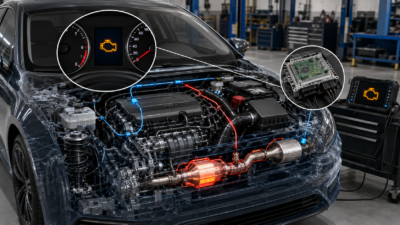
The check engine light, also called the malfunction indicator lamp (MIL), is part of your vehicle’s onboard diagnostic system. It can illuminate when the vehicle computer detects a problem with the engine, emissions, fuel, ignition, or related system. The light itself does not tell you exactly which component has failed.
Before deciding whether to continue driving, pay attention to how the light behaves and how your vehicle is performing. Check whether the light is solid or flashing, and look for symptoms such as engine shaking, significant power loss, overheating, smoke, unusual noises, or strong burning smells.
A solid warning light with normal vehicle operation is generally less urgent than a flashing warning light. Even so, it should not be ignored for weeks or months.
Key takeaway: A check engine light does not always mean you must stop immediately, but it should always be taken seriously and diagnosed as soon as practical.
Is It Safe to Drive With Check Engine Light On?
If you’re asking if it’s safe to drive with a check engine light on, the most accurate answer is: sometimes, but it depends on whether the light is solid or flashing and whether the vehicle has other symptoms.
A solid check engine light means the vehicle’s computer has detected a fault and stored diagnostic information. The problem may be relatively minor, but it can also indicate an issue that requires attention. If the car is running normally, the temperature gauge is normal, there is no smoke, and there are no severe noises or other warning lights, limited driving may be reasonable while arranging a diagnostic check.
A flashing check engine light is different. It can be associated with an active engine misfire or another condition that may cause additional damage if you continue driving. When the light is flashing, unnecessary driving should be avoided, particularly if the engine is running poorly.
is it safe to drive with check engine light on
Solid Check Engine Light
A solid light may allow limited driving when:
- The vehicle starts and runs normally.
- The engine is not overheating.
- There is no severe shaking or vibration.
- There is no significant loss of power.
- There is no smoke.
- There are no strong unusual smells.
- There are no serious engine noises.
- No critical warning light is illuminated.
Even under these conditions, you should arrange a diagnostic inspection rather than simply assuming everything is fine.
For example, a loose or faulty fuel cap can sometimes trigger the check engine light without noticeably changing how the vehicle drives. Other faults may affect emissions or engine monitoring before noticeable performance symptoms appear.
Flashing Check Engine Light
A flashing light deserves much more attention. One possible cause is an active misfire, where one or more cylinders are not operating correctly. Continued pallets for sale operation under certain conditions can potentially damage emissions-control components and may make the underlying problem worse.
If the check engine light starts flashing and the vehicle is shaking, losing power, producing unusual smells, or otherwise running badly, safely pull over when possible and seek professional assistance.
Do not assume that because the vehicle can still move, it is safe to continue driving normally.
Solid vs. Flashing Check Engine Light
Understanding the difference between a solid and flashing check engine light is one of the most important parts of deciding what to do.
Solid Check Engine Light
A solid check engine light generally means the vehicle’s diagnostic system has detected a fault that needs attention. The issue may range from an emissions-related problem to an ignition, fuel, sensor, or engine-management fault.
A solid light does not automatically mean the engine is about to fail. In some situations, the vehicle may continue to operate normally.
However, normal operation does not prove that the problem is harmless. Some faults may have little immediate effect on drivability while still affecting emissions, fuel economy, reliability, or other components.
If your vehicle has a solid light and drives normally, arrange a diagnostic scan as soon as reasonably possible.
Flashing Check Engine Light
A flashing check engine light is generally more urgent. It may indicate an active misfire or another serious fault.
A severe misfire can cause the engine to run poorly and may result in additional damage if the vehicle continues operating under certain conditions. You may notice shaking, hesitation, reduced acceleration, or unusual engine behavior.
If the light is flashing, avoid unnecessary driving. If the vehicle is operating poorly or another serious warning appears, safely stop and arrange professional assistance.
When Is It Generally Safe to Keep Driving?
There are situations where limited driving with a check engine light may be reasonable. However, “limited driving” should not be confused with continuing your normal routine for weeks without diagnosis.
Suppose your check engine light is solid and your car feels completely normal. The engine starts normally, the temperature stays within its normal range, the steering and braking feel normal, and there are no strange smells or noises. In that situation, driving directly to a repair facility may be reasonable.
Before driving, consider the following:
1. Is the Light Solid?
A solid light is generally less urgent than a flashing light. Nevertheless, it indicates that the vehicle computer has detected a fault.
2. Is the Engine Running Normally?
Pay attention to rough idling, shaking, hesitation, stalling, or unusual vibration.
3. Is the Temperature Normal?
An overheating engine can suffer serious damage if you continue driving. If the temperature warning appears or the gauge indicates overheating, do not treat the check engine light as an isolated issue.
4. Is There Any Major Loss of Power?
A vehicle that suddenly struggles to accelerate may present a safety problem, especially when entering traffic or traveling uphill.
5. Are There Other Warning Lights?
An additional oil-pressure, temperature, brake, or battery warning can significantly change the situation.
6. Are There Unusual Smells, Smoke, or Noises?
These symptoms should not be ignored simply because the check engine light is solid.
The important distinction is between driving directly to a repair facility and continuing normal driving for several days or weeks.
Even if the car appears fine, delaying diagnosis can allow a small problem to become a larger one. It is better to identify the cause early than to wait until the vehicle develops obvious performance problems.
When Is It NOT Safe to Drive?
Knowing when not to drive is just as important as knowing when limited driving may be acceptable.
A check engine light combined with serious symptoms should be treated as an urgent situation.
Flashing Check Engine Light
A flashing light may indicate an active problem such as an engine misfire. Avoid unnecessary driving, particularly if the vehicle is running poorly.
Severe Engine Shaking
If the engine is shaking severely, the vehicle may not be operating correctly. Rough operation can be associated with ignition, fuel, air, or engine-management problems.
Severe shaking should not be dismissed simply because the vehicle still moves.
Major Loss of Power
A sudden or significant reduction in power can make driving unsafe. If your vehicle cannot accelerate normally, you may have difficulty safely merging into traffic, climbing hills, or responding to changing road conditions.
Engine Overheating
Overheating is a serious warning sign. Continuing to operate an overheating engine can cause substantial mechanical damage.
If the temperature warning appears, follow the vehicle manufacturer’s instructions and stop safely when appropriate.
Oil Pressure Warning
An oil-pressure warning should be treated seriously. Engine lubrication is essential, and inadequate oil pressure can cause severe mechanical damage.
Do not assume that an oil-pressure warning is simply another symptom of the check engine light.
Smoke or Strong Burning Smell
Smoke or a strong burning smell can indicate a serious mechanical, electrical, or fluid-related problem.
If you notice smoke or a strong unusual smell, safely stop and seek professional assistance rather than continuing to drive.
Severe or Unusual Engine Noise
Loud knocking, grinding, or severe rattling can indicate a significant mechanical problem.
A vehicle that suddenly develops a serious engine noise should not be driven normally until the cause has been evaluated.
Multiple Warning Lights
Multiple dashboard warning lights can change the urgency of the situation. For example, a check engine light accompanied by an oil-pressure or temperature warning deserves much more attention than an isolated solid check engine light.
When in doubt, consult your owner’s manual and seek qualified automotive assistance.
Common Causes of a Check Engine Light
The check engine light can be triggered by many different problems. Because modern vehicles contain numerous sensors and electronically controlled systems, the warning light alone cannot identify the exact failed component.
Here are some common causes.
Loose or Faulty Fuel Cap
A loose fuel cap is a simple issue that can trigger an emissions-related warning.
Modern vehicles use an evaporative emissions system to control fuel vapors. If the fuel cap does not seal correctly, the vehicle may detect an abnormality in the system.
If the light appeared shortly after refueling, check that the fuel cap is properly installed. However, if the warning remains or returns, the vehicle should still be diagnosed.
Oxygen Sensor Problem
Oxygen sensors monitor exhaust gases and provide information used by the engine-management system.
A faulty oxygen sensor can affect fuel-control decisions and emissions performance. Depending on the vehicle and the exact problem, it may also contribute to reduced fuel economy or other symptoms.
Worn Spark Plugs
Spark plugs play an important role in igniting the air-fuel mixture in gasoline engines.
Worn or damaged spark plugs can contribute to misfires, poor engine operation, reduced performance, or increased fuel consumption.
Faulty Ignition Coil
Ignition coils help provide the electrical energy needed for spark-ignition systems.
A failing ignition coil can cause rough running or misfires. If a fault becomes severe, the check engine light may flash.
Catalytic Converter Problem
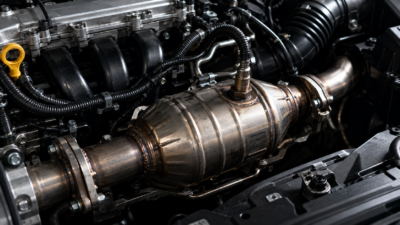
The catalytic converter is part of the vehicle’s emissions-control system. It helps reduce certain harmful pollutants in exhaust gases.
A problem with the catalytic converter or related systems can trigger the check engine light. Diagnosis should determine whether the converter itself is faulty or whether another problem is causing the warning.
Mass Airflow Sensor Problem
The mass airflow sensor helps measure the amount of air entering the engine.
Incorrect airflow information can affect engine-management calculations. Depending on the vehicle, a fault may cause poor performance, rough running, or reduced fuel economy.
Vacuum or Intake Leak
An intake or vacuum leak can allow air to enter the engine system where it is not expected.
Because engine-management systems are designed around specific air and fuel measurements, an unwanted air leak can affect operation and trigger diagnostic codes.
EVAP System Fault
The evaporative emissions, or EVAP, system helps prevent fuel vapors from escaping into the atmosphere.
Problems involving EVAP components, hoses, valves, or sealing can trigger the check engine light even when the vehicle appears to drive normally.
Important: The check engine light alone cannot tell you exactly which component has failed. A diagnostic trouble code is useful information, but proper diagnosis may require additional testing.
Can You Drive if the Car Runs Fine but the Check Engine Light Is On?
Many drivers search for “check engine light on but car runs fine” because their vehicle seems completely normal despite the warning.
Yes, a vehicle can sometimes run normally while the check engine light is illuminated.
The reason is that not every detected fault immediately causes noticeable drivability problems. Some problems primarily involve emissions systems, sensors, or monitoring functions. Other faults may be present but have not yet become severe enough to noticeably affect engine performance.
However, a normal driving experience does not prove that there is no problem.
For example, the vehicle computer may detect an emissions-related fault that does not immediately change acceleration or engine sound. The driver may continue driving without noticing anything unusual.
The best approach is to use the warning as an early opportunity to diagnose the vehicle.
A Simple Rule
Solid light + car runs normally: Drive only as necessary and arrange a diagnostic check soon.
Flashing light + poor engine performance: Treat the situation as urgent and avoid unnecessary driving.
If the light stays on, an OBD-II scan can help identify stored diagnostic trouble codes. These codes can narrow down the possible source of the problem, but they do not always prove that a particular component needs replacement.
What Should You Do When the Check Engine Light Comes On?
If the check engine light suddenly appears, follow a practical process rather than immediately assuming the worst.
Step 1: Stay Calm
A check engine light does not automatically mean catastrophic engine failure.
Take a moment to assess the situation safely.
is it safe to drive with check engine light on
Step 2: Check Whether the Light Is Solid or Flashing
This is one of the first things to determine.
A solid light is generally less urgent than a flashing light, although both require attention.
Step 3: Look for Other Warning Lights
Check the dashboard for additional warnings, including:
- Oil pressure
- Engine temperature
- Battery or charging system
- Brake system
- Other critical warnings
Additional warnings can increase the urgency.
Step 4: Check How the Vehicle Is Running
Pay attention to:
- Shaking
- Hesitation
- Loss of power
- Poor acceleration
- Stalling
- Strange sounds
- Unusual smells
- Smoke
- Overheating
If serious symptoms are present, do not continue normal driving.
Step 5: Check the Fuel Cap
If the light appeared after refueling, make sure the fuel cap is properly secured.
A loose fuel cap can sometimes trigger an EVAP-related warning.
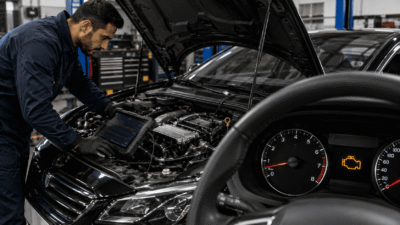
Step 6: Scan for Diagnostic Trouble Codes
An OBD-II scanner can retrieve diagnostic trouble codes stored by the vehicle computer.
The code can provide a useful starting point for diagnosis.
Step 7: Diagnose the Underlying Problem
Do not automatically replace a part simply because a diagnostic code mentions it.
A code may identify a system, circuit, or condition rather than prove that the named component itself has failed.
Professional diagnosis may involve inspecting wiring, connectors, sensors, hoses, electrical signals, and related components.
Is It Safe to Drive to a Mechanic With the Check Engine Light On?
Driving directly to a repair facility may be reasonable in some circumstances.
This is more likely to be appropriate when:
- The check engine light is solid.
- The vehicle drives normally.
- The engine is not overheating.
- There is no major power loss.
- There are no severe engine noises.
- There is no smoke.
- There is no strong burning smell.
- No other critical warning light is illuminated.
If those conditions apply, keep the trip as necessary and arrange a diagnostic inspection.
However, avoid driving to a repair facility if:
- The check engine light is flashing.
- The engine is shaking severely.
- The vehicle has significant power loss.
- The engine is overheating.
- A serious oil-pressure warning is illuminated.
- There is smoke or a strong burning smell.
- There are severe mechanical noises.
In those situations, professional assistance may be safer than attempting to drive the vehicle yourself.
Always consider your vehicle owner’s manual because manufacturers may provide model-specific instructions for warning lights.
is it safe to drive with check engine light on
What Happens If You Ignore the Check Engine Light?
Ignoring a check engine light does not necessarily cause immediate damage, but it can allow an underlying problem to continue unnoticed.
Potential consequences depend on the cause.
The Original Problem May Become Worse
A small fault can sometimes develop into a more significant problem if it is not addressed.
Fuel Economy May Decrease
Certain engine-management or sensor problems can cause the engine to operate less efficiently.
Engine Performance May Suffer
A vehicle may eventually develop hesitation, rough running, reduced acceleration, or other drivability problems.
Emissions May Increase
Many check engine light faults are connected to emissions-control systems. A malfunction can cause the vehicle to produce higher emissions.
Other Components May Be Affected
Some unresolved faults can place additional stress on related systems or components.
Repairs May Become More Expensive
Early diagnosis can sometimes prevent a relatively straightforward issue from developing into a more complicated repair.
The Vehicle May Become Unreliable
A warning that initially appears without symptoms may eventually be accompanied by poor performance or difficulty operating the vehicle.
For these reasons, the check engine light should not be treated as a permanent dashboard decoration.
Can the Check Engine Light Turn Off by Itself?
Yes, a check engine light can sometimes turn off by itself.
The vehicle’s onboard diagnostic system continuously monitors various systems. If a temporary condition occurs and the system later determines that the condition is no longer present, the warning may eventually turn off.
For example, a temporary EVAP-related condition may cause a warning that later disappears after the system passes subsequent checks.
However, a light turning off does not always prove that the underlying issue has been permanently resolved.
Diagnostic information may remain stored in the vehicle computer, depending on the system and circumstances.
If the light repeatedly appears and disappears, that pattern is important information for a technician.
Do not assume that a warning that disappeared never mattered. If the same warning returns, arrange an inspection.
How an OBD-II Scanner Can Help
An OBD-II scanner is a diagnostic tool that communicates with a vehicle’s onboard diagnostic system.
OBD-II stands for On-Board Diagnostics II, a standardized diagnostic system used in many modern vehicles.
When the check engine light is illuminated, an OBD-II scanner can often retrieve diagnostic trouble codes (DTCs).
These codes help identify the system or condition that the vehicle computer detected.
For example, a code may point toward a misfire, an emissions-related problem, a sensor circuit, or another monitored system.
However, it is important to understand the difference between a code and a diagnosis.
A diagnostic code is a clue. It does not always prove that the component named in the code has failed.
For example, a sensor-related code could be caused by the sensor itself, wiring, a connector, an electrical problem, an air or fuel issue, or another related condition.
Professional diagnosis may involve:
- Visual inspection
- Testing sensors
- Checking wiring
- Checking connectors
- Measuring electrical signals
- Inspecting hoses
- Testing related systems
- Comparing live data from the vehicle
An OBD-II scanner is therefore a useful first step, but it should not automatically be treated as a complete repair diagnosis.
How Much Does It Cost to Fix a Check Engine Light?
There is no single price for fixing a check engine light because the light itself is not a specific repair.
The total cost depends on the underlying problem.
Factors that can affect repair costs include:
- Vehicle make and model
- Engine type
- Age of the vehicle
- Cause of the warning
- Required replacement parts
- Labor rates
- Diagnostic complexity
- Location
- Whether additional problems are discovered
A loose fuel cap may require little or no repair, while a complex engine-management or emissions problem can require significantly more diagnostic work.
Likewise, replacing a simple component may be relatively straightforward, while diagnosing an intermittent electrical fault may take more time.
Instead of estimating the cost based only on the dashboard warning, get the vehicle scanned and properly diagnosed.
Early diagnosis can sometimes help prevent a relatively small issue from becoming a larger and more expensive repair.
If a repair shop gives you a diagnosis, ask what caused the warning, what testing was performed, what needs to be repaired, and what could happen if the repair is delayed.
How to Prevent Check Engine Light Problems
You cannot prevent every check engine light because vehicle components eventually wear out and unexpected faults can occur.
However, regular maintenance can reduce the likelihood of certain problems and help identify issues earlier.
Follow the Manufacturer’s Service Schedule
Use the maintenance schedule provided for your vehicle.
It may include recommended intervals for spark plugs, filters, fluids, inspections, and other maintenance items.
Maintain Appropriate Fluid Levels
Check and maintain fluids according to the manufacturer’s recommendations.
Use the correct type of fluid for your vehicle.
Replace Spark Plugs as Recommended
Spark plugs wear over time. Replacing them according to the manufacturer’s schedule can help maintain proper ignition performance.
Address Unusual Symptoms Early
Do not wait for a dashboard warning if your vehicle begins running differently.
Hesitation, rough idling, unusual noises, or changes in fuel economy can be useful early warning signs.
Keep the Fuel Cap in Good Condition
Make sure the fuel cap seals correctly after refueling.
A damaged or improperly installed cap can contribute to EVAP-related warnings.
Use Correct Parts and Fluids
Using the appropriate components and fluids helps maintain the vehicle according to its design specifications.
Keep Service Records
Maintenance records can help you and your technician understand the vehicle’s history.
Good records may also make recurring problems easier to identify.
FAQ
Is it safe to drive with check engine light on?
It depends on the situation. A solid check engine light with normal vehicle operation may allow limited driving to a repair facility. A flashing light, especially when combined with shaking, power loss, overheating, smoke, or unusual noises, should be treated as urgent.
The most important factors are whether the light is solid or flashing and whether the vehicle has other symptoms.
How long can you drive with the check engine light on?
There is no universal safe mileage or time limit.
The amount of time you can safely drive depends on the underlying problem. A minor emissions-related issue may allow the vehicle to operate normally for some time, while another fault may require immediate attention.
Do not use a specific number of miles or days as a guarantee of safety.
Is it safe to drive with a solid check engine light?
A solid light may allow limited driving if the vehicle is running normally and there are no serious symptoms or additional critical warning lights.
However, the warning still indicates that the vehicle has detected a problem. Arrange a diagnostic check as soon as practical.
Is it safe to drive with a flashing check engine light?
A flashing check engine light should be treated as an urgent warning.
It can be associated with an active engine misfire or another serious fault. If the vehicle is also shaking, losing power, overheating, or behaving abnormally, safely stop driving and seek professional assistance.
Can I drive if the check engine light is on but the car runs fine?
A car can sometimes run normally while the check engine light is on.
Some faults may primarily affect emissions, sensors, or monitoring systems and may not immediately produce noticeable symptoms.
However, normal driving does not prove that the vehicle is problem-free. Have the vehicle scanned and diagnosed.
Does a check engine light always mean a serious problem?
No.
The causes range from relatively simple issues, such as a fuel-cap sealing problem, to more serious engine, ignition, emissions, or electrical faults.
Because the light covers many possible problems, you need diagnostic information to determine the actual cause.
Can a bad gas cap cause the check engine light?
Yes.
A loose, damaged, or improperly sealing fuel cap can sometimes cause an EVAP-related fault and illuminate the check engine light.
If the light remains on after securing the cap, the vehicle should be checked rather than assuming the cap was definitely the cause.
Should I use an OBD-II scanner?
An OBD-II scanner can be useful for retrieving diagnostic trouble codes.
It can provide valuable information about the system that the vehicle computer has detected as abnormal.
However, a code is not always proof that a particular component has failed. Additional testing may be required.
Will the check engine light go away on its own?
Sometimes.
If the vehicle detects a temporary condition and later determines that the fault is no longer present, the light may turn off.
However, a warning that disappears can still be worth investigating, especially if it returns repeatedly or the vehicle has symptoms.
Should I disconnect the battery to turn off the check engine light?
Disconnecting the battery simply to turn off the warning is not a proper repair.
The important goal is to identify and correct the underlying problem.
Clearing the warning without diagnosing the cause can make it harder to understand the vehicle’s history and may allow the original problem to remain unresolved.
If a warning is present, diagnose the cause rather than simply trying to make the light disappear.
Conclusion
So, is it safe to drive with check engine light on? The answer depends on what the vehicle is telling you beyond the warning light itself.
A solid check engine light with normal vehicle operation may allow limited driving in some situations, particularly when you are traveling directly to a repair facility. The vehicle should still be diagnosed promptly because a normal driving experience does not prove that there is no underlying problem.
A flashing check engine light is more urgent. It can indicate an active misfire or another serious fault, particularly when combined with engine shaking, major power loss, overheating, smoke, unusual smells, or severe engine noises.
The safest approach is to pay attention to the complete picture rather than the dashboard light alone.
